
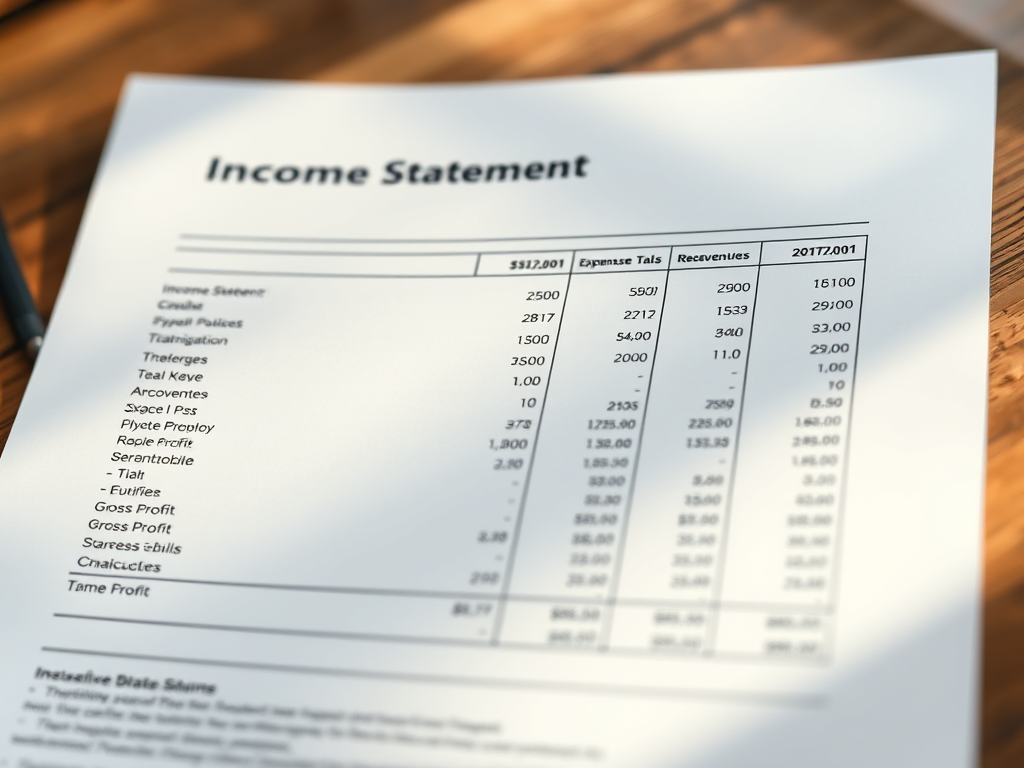
The Structure: Single-Step vs. Multi-Step
There are actually two ways to write an Income Statement.
- Single-Step (The “Laundry List”): You list every single revenue source, then list every single expense, and subtract the total. It’s easy, but it hides the details.
- Multi-Step (The “Storyteller”): This is what professional accountants use (and what we used in the coffee shop example). It pauses at key intervals to give you subtotals (Gross Profit, Operating Profit).
Why do we prefer Multi-Step?
Because it separates your core business from your side hustles.
- If you run a bakery but make all your profit from “winning the lottery” (a one-time gain), a Single-Step statement looks great. A Multi-Step statement reveals your actual baking business is failing.
2. Deep Dive into the “Confusing” Line Items
There are three specific lines on an Income Statement that often trip people up.
A. COGS vs. Expenses (The “Direct” Rule)
The hardest part of the Income Statement is deciding if a cost is COGS or an Operating Expense.
- The Rule: If you stopped selling products today, would this cost disappear?
- Yes: It’s COGS (e.g., Coffee Beans. No sales = no beans needed).
- No: It’s an Expense (e.g., Rent. You pay the landlord even if you sell zero coffee).
B. Depreciation (The “Phantom” Expense)
You will often see a line called “Depreciation & Amortization.” This is a non-cash expense.
- Scenario: You buy a $\$10,000$ espresso machine.
- The Problem: If you put the full $-\$10,000$ in Month 1, your income statement looks terrible that month, but great for the next 5 years.
- The Fix: You spread the cost out. You record a “Depreciation Expense” of $\$200$ every month for 4 years.
- Key Insight: You didn’t actually write a check for $\$200$ this month. You paid cash years ago. This is why Net Income is not the same as Cash in the Bank.
C. EBITDA (The Investor’s Favorite)
You might hear people shout about “EBITDA” (Ee-bit-dah). It stands for Earnings Before Interest, Taxes, Depreciation, and Amortization.
- It is basically your Operating Profit with the “Phantom Expenses” (Depreciation) added back in.
- Investors love it because it shows the raw power of your core operations without the “noise” of tax rates or accounting decisions.
3. How to Analyze It: The “Margins”
When Warren Buffett looks at an Income Statement, he doesn’t just look at the dollar amounts; he looks at the percentages (Margins). This allows him to compare a tiny coffee shop to Starbucks.
Need help putting this statement together?
Reach out to us via our contact for below for a free consultation!
Leave a Reply